My country "Tibet" a hell on Earth

Friday, October 8, 2010

New Political Ideas in Old Political Leaders


This article was posted last year just before Obama's inauguration day.
It is refresh yourself last year at this time the political battles.

New Wine in Old Wineskins

The inauguration of President Elect Barack Obama is about to take place on January 20, 2009 in Washington, DC. It


seems that many people are expecting this occasion to make history. The questions that are presented here to raise awareness are: (a) what history will be made? and (b) how will the Obama Administration be different from any other presidential administration? While it seems many Americans are willing to put all their belief in another administration that talks about change, utopia, globalization, one world order, or new world order, these are concepts and ideas of old political leaders throughout century. What do these concepts and ideas mean to the people in America? How will "change" help those who are not sure how to make change? In addition, think of the American people that fear "change."

It sees that President Elect Barack Obama has not really thought about the "change" to take place in America. If the President Elect Obama had a clear concept and idea of the change needed, he would not be so quick and willing to nominate the same political leaders that have ran this country in the last 20 years or so. Perhaps President Elect Obama should have refused to keep giving power to those old political leaders who refer to themselves as the "anointed elite."

There is an old proverb that warns us not to put new wine into old wine skins, which holds the same similarity of trying to put new political ideas into old political leaders who hold steadfast to their old political concepts and ideas.

A word of wisdom to the President Elect Barack Obama, the history you will make is forged by its framers and designers, and your administration will be different because you will be the one that will be used to help strengthened the "anointed elite" agenda, a plan to get the American people to welcome in full force of government intrusion. The Obama Administration is the entrance of dictatorship with martial law.

Apple’s No 1 but there’s blood on your iPhone

Published: Friday, May 28, 2010,

By Venkatesan Vembu | Place: Hong Kong | Agency: DNA


An epidemic of suicides, including three more unconfirmed deaths on Thursday, at a factory in southern China that assembles Apple iPhones and iPads, among other branded electronic goods, has reinforced the darkest stereotypes of Chinese sweatshops, and prompted a global campaign for a boycott of Made-in-China consumer electronics.

Reports and photographs of the latest alleged deaths — including a ‘double suicide’ — surfaced on Chinese web sites on Thursday, but were swiftly deleted by censors. If confirmed, they could take the number of suicides at Foxconn’s sprawling factory in Shenzhen since January to 14. Two other workers survived suicide attempts.

Labour activists told DNA most of the dead were young migrant workers from rural China, who worked for up to 60 hours a week, for a pitiful minimum wage, at a “military-style” disciplinarian workplace in an unfriendly city without access to social benefits and no sense of community.

Most of them jumped to their death from their dormitories.
“Foxconn workers told us they had no avenues to channel their workplace stress,” says Debby Chan, project officer at Students & Scholars Against Corporate Misbehaviour (Sacom), a non-profit organisation that campaigns for workers’ rights. Free trade unions are disallowed in China, including at the factories of Foxconn, a Taiwanese-owned Fortune 500 company and the world’s largest electronics manufacturer, which has factories in many countries, including India.

“On the production line, workers have to stand all day and complete a task every seven seconds, and cannot talk to one another,” says Chan. “And in their spartan dormitories, which they share with 10-12 others, they don’t have friends. They live in an atmosphere of alienation and isolation.”

Working conditions at Foxconn may be drawing particular attention, but they are by no means unique to the company, says Geoffrey Crothall, communications director at China Labour Bulletin, an NGO that promotes Chinese workers’ rights.

“The same factory system and the same problems can be found at companies across southern China and in the coastal areas.”
In fact, Crothall reckons, similar suicides at other factories may be going unreported. “The reason why this Foxconn factory gets so much attention is, firstly, because it is connected to major international brands, including Apple.” Additionally, he adds, the mainland Chinese media has been focussing on it because the company is Taiwanese-owned.

Taiwanese administrators’ disrespect for mainland Chinese workers, and management strategies aimed at creation of only short-term jobs are critical reasons underlying the spate of suicides, according to Li Qiang, executive director at China Labour Watch.

Sacom is coordinating with global NGOs to observe June 8 as a “global day of remembrance” for the suicide victims at Foxconn and to urge consumers to boycott Apple iPhones, “which come with the bloodstains of economically exploited Chinese migrant workers”.

Crothall sees the consumer boycott call as “a valuable attempt to raise global awareness of the events at Foxconn” but suggests an alternative approach.

“Apple should get actively involved in the problems of Foxconn, and if additional costs are to accrue from giving better wages to workers, Apple could pass them on to consumers — who then have the choice whether or not to buy the product.”

IPhone Maker in China Is Under Fire After a Suicide

Published: July 26, 2009

SHENZHEN, China — When a closely guarded prototype of a new Apple iPhone went missing at a huge factory here two weeks ago, an internal investigation focused on a shy, 25-year-old employee named Sun Danyong.

Mr. Sun, a college graduate working in the logistics department, denied stealing the iPhone. But he later complained to friends that he had been beaten and humiliated by the factory’s security team. On the night he was questioned, he sent an anguished text message to his girlfriend.

“Dear, I’m sorry. Go back home tomorrow,” he wrote, according to a message she later posted online. “I ran into some problems. Don’t tell my family. Don’t contact me. I’m begging you for the first time. Please do it! I’m sorry.”

Soon after, in the early-morning hours of July 16, Mr. Sun apparently jumped to his death from the 12th floor of an apartment building in what his employer, Foxconn Technology, says was a suicide.

Apple and Foxconn, one of the world’s biggest manufacturers of consumer electronics and a major Apple supplier, issued statements last week expressing sorrow for the death. Foxconn said it suspended one security officer, pending a police investigation, and that the company was now considering counseling services for its employees.

The Apple statement said: “We are saddened by the tragic loss of this young employee, and we are awaiting results of the investigations into his death. We require that our suppliers treat all workers with dignity and respect.” The company would not comment further.

The local police bureau declined to answer questions about the case. But reports of the apparent suicide have set off a firestorm of criticism of Foxconn’s treatment of Mr. Sun, labor conditions at its factories and the pressures Apple places on suppliers to abide by the culture of secrecy that surrounds its development of new products.

The case also underscores the challenges that global companies face in trying to safeguard their designs and intellectual property in the hotly contested smartphone market, particularly here in the southern Chinese city of Shenzhen, an electronics manufacturing center known for piracy and counterfeiting.

Apple’s popular iPhone is already widely imitated and counterfeited in China. And there are regular rumors on Chinese Web sites about new Apple prototypes leaking out of Chinese factories.

“When you outsource to a third party, you lose some control,” says Dane Chamorro, general manager in China at Control Risks, a global consulting firm. “And if you’re outsourcing to China, it’s going to be even more challenging. There’s going to be a bounty on every design.”

Labor rights groups say the worker’s death should compel Apple to improve conditions at its supplier factories in China and prevent worker abuse.

Foxconn, part of Taiwan’s Hon Hai group, has also been sharply criticized because of suspicions about unduly harsh treatment of the worker.

Foxconn, which produces electronics for some of the world’s best-known brands, like Sony and Hewlett-Packard, operates a cluster of sprawling factories in southern China. One of its Shenzhen campuses has nearly 300,000 workers.

But some labor rights activists say the company treats employees harshly, routinely violating labor laws.

In an e-mail message on Thursday, China Labor Watch, which monitors Chinese factories and is based in New York, blamed Mr. Sun’s death on “Foxconn’s inhumane and militant management system, which lacks fundamental respect for human rights.” The group said it published an in-depth study of Foxconn last year, detailing its abuses.

James Lee, general manager of China operations at Foxconn, defended the company’s labor practices in a lengthy interview on Friday, and also said the company would strive to improve management of its facilities.

“It’s very difficult for the company to defend itself against such charges,” Mr. Lee said of complaints from labor rights groups. “You’re welcome to look at how employees are treated here.”

A reporter toured two of the company’s campuses in Shenzhen on Friday, including the one where Mr. Sun worked. The campuses were so large they contained retail stores, banks, post offices and high-rise dormitories with outdoor swimming pools.

The reporter was not allowed to see manufacturing lines because the company said it had to protect trade secrets.

Saturday, October 2, 2010

西藏國歌


Free Tibet.

西藏国歌 - Tibetan National Anthem


Free Tibet.

Friday, September 24, 2010

History of Tibet before the Chinese Invasion of 1949

Tibet has a history dating back over 2,000 years. A good starting point in analyzing the country's status is the period referred to as Tibet's "imperial age", when the entire country was first united under one ruler. There is no serious dispute over the existence of Tibet as an independent state during this period. Even China's own historical records and the treaties Tibet and China concluded during that period refer to Tibet as a strong state with whom China was forced to deal on a footing of equality.


At what point in history, then, did Tibet cease to exist as a state to become an integral part of China? Tibet's history is not unlike that of other states. At times, Tibet extended its influence over neighboring countries and peoples and, in other periods, came itself under the influence of powerful foreign rulers - the Mongol Khans, the Gorkhas of Nepal, the Manchu emperors and the British rulers of India.


It should be noted, before examining the relevant history, that international law is a system of law created by states primarily for their own protection. As a result, international law protects the independence of states from attempts to destroy it and, therefore, the presumption is in favor of the continuation of statehood. This means that, whereas an independent state that has existed for centuries, such as Tibet, does not need to prove its continued independence when challenged, a foreign state claiming sovereign rights over it needs to prove those rights by showing at what precise moment and by what legal means they were acquired.


China's present claim to Tibet is based entirely on the influence that Mongol and Manchuk emperors exercised over Tibet in the thirteenth and eighteenth centuries, respectively.


As Genghis Khan's Mongol Empire expanded toward Europe in the west and China in the east in the thirteenth century, the Tibetan leaders of the Sakya school of Tibetan Buddhism concluded an agreement with the Mongol rulers in order to avoid the otherwise inevitable conquest of Tibet. They promised political allegiance and religious blessings and teachings in exchange for patronage and protection. The religious relationship became so important that when Kublai Khan conquered China and established the Yuan dynasty, he invited the Sakya Lama to become the Imperial Preceptor and supreme pontiff of his empire.


The relationship that developed and still exists today between the Mongols and Tibetans is a reflection of the close racial, cultural and especially religious affinity between the two Central Asian peoples. To claim that Tibet became a part of China because both countries were independently subjected to varying degrees of Mongol control, as the PRC does, is absurd. The Mongol Empire was a world empire; no evidence exists to indicate that the Mongols integrated the administration of China and Tibet or appended Tibet to China in any manner. It is like claiming that France should belong to England because both came under Roman domination, or that Burma became a part of India when the British Empire extended its authority over both territories.


This relatively brief period of foreign domination over Tibet occurred 700 years ago. Tibet broke away from the Yuan emperor before China regained its independence from the Mongols with the establishment of the native Ming dynasty. Not until the eighteenth century did Tibet once again come under a degree of foreign influence.


The Ming dynasty, which ruled China from I368 to I644, had few ties to and no authority over Tibet. On the other hand, the Manchus, who conquered China and established the Qing dynasty in the seventeenth century, embraced Tibetan Buddhism as the Mongols had and developed close ties with the Tibetans. The Dalai Lama, who had by then become the spiritual and temporal ruler of Tibet, agreed to become the spiritual guide of the Manchu emperor. He accepted patronage and protection in exchange. This "priest-patron" relationship, which the Dalai Lama also maintained with numerous Mongol Khans and Tibetan nobles, was the only formal tie that existed between the Tibetans and Manchus during the Qing dynasty. It did not, in itself, affect Tibet`s independence.


On the political level, some powerful Manchu emperors succeeded in exerting a degree of influence over Tibet. Thus, between I720 and I792 the Manchu emperors Kangxi, Yong Zhen and Qianlong sent imperial troops into Tibet four times to protect the Dalai Lama and the Tibetan people from foreign invasion or internal unrest. It was these expeditions that provided them with influence in Tibet. The emperor sent representatives to the Tibetan capital, Lhasa, some of whom successfully exercised their influence, in his name, over the Tibetan government, particularly with respect to the conduct of foreign relations. At the height of Manchu power, which lasted a few decades, the situation was not unlike that which can exist between a superpower and a neighboring satellite or protectorate. The subjection of a state to foreign influence and even intervention in foreign or domestic affairs, however significant this may be politically, does not in itself entail the legal extinction of that state. Consequently, although some Manchu emperors exerted considerable influence over Tibet, they did not thereby incorporate Tibet into their empire, much less China.


Manchu influence did not last for very long. It was entirely ineffective by the time the British briefly invaded Tibet in I904, and ceased entirely with the overthrow of the Qing dynasty in I9II, and its replacement in China by a native republican government. Whatever ties existed between the Dalai Lama and the Qing emperor were extinguished with the dissolution of the Manchu Empire.


1911 - 1950


From I911 to I950, Tibet successfully avoided undue foreign influence and behaved, in every respect, as a fully independent state. The I3th Dalai Lama emphasized his country's independent status externally, in formal communications to foreign rulers, and internally, by issuing a proclamation reaffirming Tibet's independence and by strengthening the country's defenses. Tibet remained neutral during the Second World War, despite strong pressure from China and its allies, Britain and the U.S.A. The Tibetan government maintained independent international relations with all neighboring countries, most of whom had diplomatic representatives in Lhasa.


The attitude of most foreign governments with whom Tibet maintained relations implied their recognition of Tibet's independent status. The British government bound itself not to recognize Chinese suzerainty or any other rights over Tibet unless China signed the draft Simla Convention of I9I4 with Britain and Tibet, which China never did. Nepal's recognition was confirmed by the Nepalese government in I949, in documents presented to the United Nations in support of that governments application for membership.


The turning point in Tibet's history came in I949, when the People's Liberation Army of the PRC first crossed into Tibet. After defeating the small Tibetan army, the Chinese government imposed the so-called "I7-Point Agreement for the Peaceful Liberation of Tibet" on the Tibetan government in May I951. Because it was signed under duress, the agreement was void under international law. The presence of 40,000 troops in Tibet, the threat of an immediate occupation of Lhasa and the prospect of the total obliteration of the Tibetan state left Tibetans little choice.


It should be noted that numerous countries made statements in the course of UN General Assembly debates following the invasion of Tibet that reflected their recognition of Tibet's independent status. Thus, for example, the delegate from the Philippines declared: "It is clear that on the eve of the invasion I950, Tibet was not under the rule of any foreign country." The delegate from Thailand reminded the assembly that the majority of states "refute the contention that Tibet is part of China." The US joined most other UN members in condemning the Chinese "aggression" and "invasion" of Tibet.


In the course of Tibet's 2,000-year history, the country came under a degree of foreign influence only for short periods of time in the thirteenth and eighteenth centuries. Few independent countries today can claim as impressive a record. As the ambassador for Ireland at the UN remarked during the General Assembly debates on the question of Tibet,"[f]or thousands of years, or for a couple of thousand years at any rate, [Tibet] was as free and as fully in control of its own affairs as any nation in this Assembly, and a thousand times more free to look after its own affairs than many of the nations here."


From a legal standpoint, Tibet has to this day not lost its statehood. It is an independent state under illegal occupation. Neither China's military invasion nor the continuing occupation has transferred the sovereignty of Tibet to China. As pointed out earlier, the Chinese government has never claimed to have acquired sovereignty over Tibet by conquest. Indeed, China recognizes that the use or threat of force (outside the exceptional circumstances provided for in the UN Charter), the imposition of an unequal treaty or the continued illegal occupation of a country can never grant an invader legal title to territory. Its claims are based solely on the alleged subjection of Tibet to a few of China's strongest foreign rulers in the thirteenth and eighteenth centuries. If other countries were to make such tenuous claims based on their imperial past, how seriously would they be taken? Are we not, in even considering the merits of China's arguments, accepting the right of powerful modern rulers to invade foreign countries in order to recreate lost empires of their ancestors?
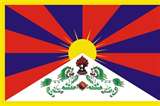
China-Tibet

China and Tibet

By NICHOLAS KRISTOF

Lodi Gyari, the Dalai Lama’s representative in Washington, has a good op-ed in the South China Morning Post (by subscription only). In particular, he makes two points that I think Beijing just doesn’t “get.” First:
The third mindset is that China should wait until the passing away of the present Dalai Lama, when the Tibetan issue will naturally disappear. This thinking is based on the belief that a leaderless and disoriented movement would fragment into pieces and eventually become irrelevant. This is a misplaced mindset for many reasons, and very counterproductive to China’s own future. Those who subscribe to this view do not understand that fragmentation today no longer means irrelevance; it means radical unpredictability and vastly greater risk. Far from fading away, the Tibetan political movement will reinvent itself in the absence of the current, Fourteenth Dalai Lama, and become something far more complex and unmanageable in the process.
That’s exactly right. China is waiting for the Dalai Lama to die, so that Tibetans will lose their leader and cohesion. But the result is not that Tibet will be easier to dominate; rather, it is likely to become more violent. There already are many, many young Tibetans who think the Dalai Lama has been too patient, too conciliatory, too pacifist. This is particularly true of the exiles; Tibetans actually in China tend to be more pragmatic and willing to work things out. But overall, my hunch is that we’ll see more violent resistance after the Dalai Lama goes.
Many Chinese, outraged by the violence against ethnic Han in Lhasa during the last protests, blame the Dalai Lama — and it’s true that he was too slow to condemn the violence. But overall there is no  question about it: His Holiness has been a huge restraining force, working against violence.
So my hunch is that after the Dalai Lama dies, Tibet will come to look more like Xinjiang. Human rights abuses will get less attention, because the Dalai Lama isn’t there to call attention to them. But protests will be more violent and more common, and there’ll be some genuine terrorists bringing in weapons from abroad.
The other problem with the Dalai Lama dying is that any kind of a solution to the Tibetan issue is going to require painful concessions on both sides. It’s not clear that the Dalai Lama is willing to make the kind of concessions necessary, but if he is he could probably carry the Tibetan people behind him. In contrast, after he is gone, there is simply no one who could unite Tibetans and persuade them to accept the necessary concessions. The chance of a peaceful political solution will die with the Dalai Lama.
I outlined what a deal would look like in this 2008 column. Essentially, Tibetans would accept unequivocal Chinese rule in exchange for real autonomy, greater linguistic, cultural and religious freedom, and brakes on Chinese migration into ethnic Tibetan areas.
Lodi Gyari’s second important point is this:
It is disheartening to see just how far China’s leaders have drifted from the early days of bold reform. The leaders I came to know in the early 1980s shared a conviction about their historic role in bringing about the difficult transition that was needed in post-Mao China. Leaders like Hu Yaobang understood that the greatness of China’s future lay in the responsible actions of its leaders to conduct the necessary groundwork for true stability. Hu called for courageous policies relating to Tibet. Because he was open and honest, dared to act, dared to face reality and dared to bear responsibility, he won the hearts of the Tibetan people.
What Lodi Gyari doesn’t acknowledge is the mismatch. In the early 1980’s, Hu Yaobang and Zhao Ziyang were prepared to do a deal with the Dalai Lama — but it was His Holiness who balked. After the Cultural Revolution, the Tibetans just didn’t trust Beijing and thought time was on their side. They made a historic miscalculation in the 1980’s, and then the window for negotiation closed with the departure of Hu Yaobang and Zhao Ziyang. Maybe it’ll reopen with some future leadership team, but today’s Politburo is just not prepared to make the concessions necessary. Instead, it operates under the delusion that things will get better after the Dalai Lama dies.
The Dalai Lama has been extraordinarily effective with global public opinion, but he has been spectacularly ineffective with the constituency that matters most — Chinese officials and the Chinese public. It’s not too late for him to devote himself to improving his Mandarin skills, speaking more to Chinese audiences, and seeking to move to China. That request to move to, say, Beijing would put China in a box. I don’t think Beijing would accept, but it would at least be a signal of the Dalai Lama’s desire to work things out with the Chinese leaders.
And the track we’re on is disastrous. More Han Chinese are moving to Tibet, destroying its traditional character so that it will be gone forever. A political deal is the only way to forestall that and avoid violence, but it’s hard to see such a deal coming. Your thoughts?